Proudly Canadian

Discover how to slash your holiday eCommerce shipping costs by up to 70% with FlagShip’s expert tips. From leveraging discounted rates to streamlining your operations, these five easy strategies will help you save money and delight your customers this holiday season.
The holiday sales season can bring more eCommerce orders, but higher fulfilment and delivery expenses can quickly reduce the value of that growth. Packaging choices, service selection, inaccurate shipment details, free-shipping offers and returns all affect the final cost of an order.
Managing holiday eCommerce shipping costs does not mean choosing the slowest service for every package. It means comparing the available options, using accurate data and designing a process that balances cost, timing and customer expectations. The seven strategies below can help Canadian online businesses prepare for the 2026 rush.
How Can an eCommerce Business Reduce Holiday Shipping Costs?
Start by measuring the total shipping cost per order rather than looking only at the courier rate. Include packaging, labour, pickup arrangements, address corrections, billing adjustments, returns and the portion of shipping your business subsidizes.
Compare available services for each shipment, use right-sized packaging and enter the final packed weight and dimensions. If you offer free shipping, set rules that fit your margins. Review the resulting cost and delivery data throughout the season so you can correct problems before they affect a large number of orders.
Don’t have a FlagShip account? It’s easy and free to sign up!
Create your account to compare discounted courier rates
Quick Summary: Reducing Holiday eCommerce Shipping Costs
- Measure the full cost: Track packaging, labour, delivery charges, adjustments, subsidies and returns.
- Compare services: Review the available courier rates and delivery estimates for each shipment.
- Package efficiently: Use protective, right-sized packaging and record final dimensions and weight.
- Set offer rules: Use minimum order values or eligibility conditions if your business subsidizes shipping.
- Reduce manual work: Test an eCommerce integration before peak season where it fits your workflow.
- Review results: Monitor cost per order, adjustments, delivery issues and returns during the campaign.
Holiday eCommerce Shipping Cost Drivers
| Cost driver | Why it matters | What to review |
|---|---|---|
| Service selection | The lowest rate may not meet the customer’s timing, while an unnecessarily fast service may reduce margin. | Available rates, estimates and customer promise. |
| Package size | A box larger than necessary may increase chargeable dimensional weight. | Right-sized packaging and adequate protection. |
| Shipment data | Incorrect weight, dimensions or address details may lead to adjustments or delays. | Final packed measurements and complete address. |
| Shipping promotion | Free or flat-rate shipping transfers part of the cost to the business. | Order threshold, eligible regions, products and margin. |
| Returns | Return transport, handling and damaged inventory can change the profitability of the original sale. | Return rate, reason, label cost and restocking outcome. |
1. Calculate the Total Shipping Cost per Order
Create a consistent way to calculate what shipping actually costs your business. Include the courier charge, packaging materials, fulfilment labour, pickup expenses, insurance or declared-value coverage where applicable, adjustments and expected return costs.
Compare that figure with the shipping amount collected from the customer and the margin on the order. This reveals whether a promotion is affordable and whether certain products, destinations or service levels repeatedly produce weak margins.
2. Compare Courier Services Instead of Using One Default
The best balance of cost and timing can change with the origin, destination, package and required delivery date. Compare the services available for each shipment rather than automatically selecting the same courier and service for every order.
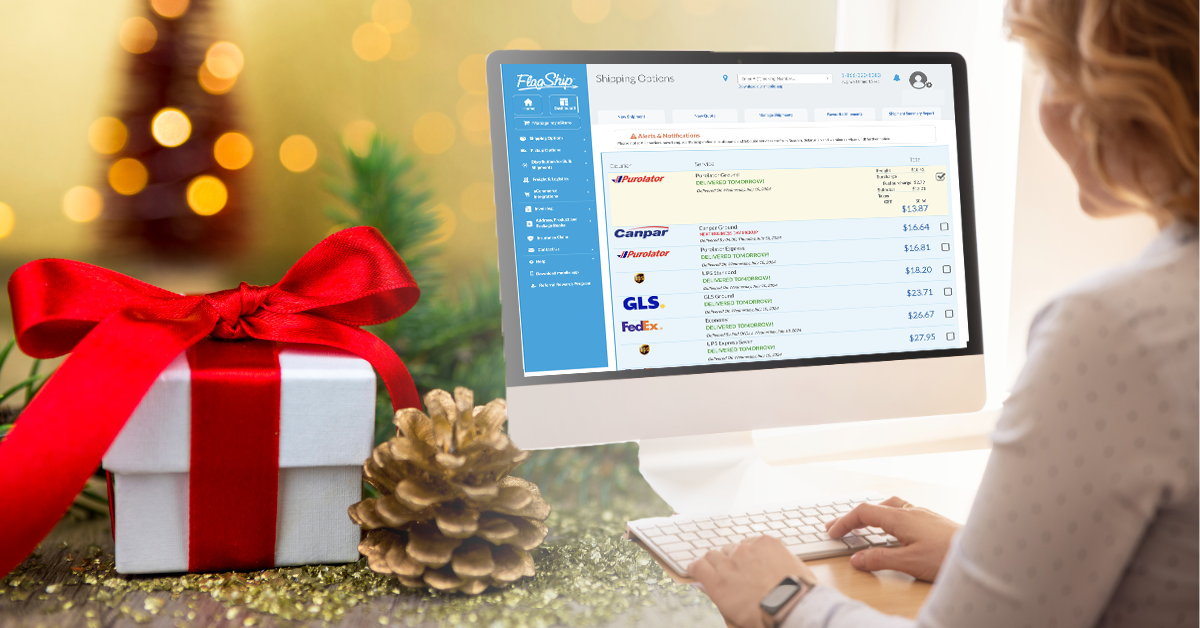
FlagShip’s online shipping system allows Canadian businesses to compare available discounted rates and services from several couriers in one place. Enter accurate shipment details and review the displayed delivery information before making a customer commitment.
3. Use Protective, Right-Sized Packaging
Choose the smallest practical outer package that safely protects the contents. Excess empty space requires more cushioning and may increase dimensional weight, but packaging that is too small or weak can increase the risk of damage.
Standardize a manageable set of boxes or mailers for your most common products and test them before the rush. Review FlagShip’s proper packaging guidance when preparing your packaging plan.
4. Connect eCommerce Orders to Your Shipping Workflow
An integration can reduce repetitive data entry by bringing online-store order information into the shipping process. This may save staff time and support a more consistent workflow when daily order volume increases.
FlagShip offers eCommerce shipping integrations for several platforms. Confirm compatibility and available features, then test imports, address fields, package settings, labels and tracking updates before the holiday rush. Imported details should still be checked before a shipment is processed.
See FlagShip’s eStore Shipping Manager
5. Design Free-Shipping and Flat-Rate Offers Around Your Margins
Free shipping is not free to the business. Before launching an offer, estimate the average delivery cost for eligible orders and determine how much your product margin can absorb.
You may choose a minimum order value, limit the offer to selected products or regions, exclude oversized items or subsidize only an economical service. State the conditions clearly at the beginning of the shopping journey so customers are not surprised at checkout.
6. Verify Shipment Details to Reduce Adjustments
Confirm the customer’s complete address, including the unit number and postal code. Weigh and measure the final packed parcel rather than relying only on product information or a packaging estimate.
Record the measurements used when the shipment is created. If a billing adjustment occurs, that information can help your team compare the original entry with the carrier’s assessment and identify recurring process errors.
7. Include Returns in Your Holiday Cost Plan
Return shipping, inspection, repackaging and unsellable inventory can change the true profitability of a holiday order. Review past return rates and reasons by product before deciding how your seasonal return offer will work.
Publish the return window, eligibility rules, required item condition and responsibility for return-shipping costs. A clear process can reduce manual decisions and help customers understand the policy before they purchase.
Holiday eCommerce Shipping Cost Checklist
| When | Cost check | Operational check |
|---|---|---|
| Before promotions | Model shipping offers using expected order values, regions and package sizes. | Test packaging, integrations, service rules and customer messages. |
| When an order arrives | Confirm the amount collected for shipping and the order margin. | Verify the address, promised timing and product restrictions. |
| Before processing | Compare available services using final package information. | Check weight, dimensions, packaging, label and documents. |
| During the campaign | Monitor average cost per order, subsidies and adjustments. | Monitor backlog, exceptions and customer inquiries. |
| After the season | Calculate final cost per order, including returns and adjustments. | Document improvements for packaging, checkout and fulfilment. |
Compare Holiday Shipping Options With FlagShip
FlagShip helps Canadian small and medium-sized businesses compare available discounted rates from Purolator, UPS, FedEx, Canpar, DHL and GLS through one online shipping system. The services and estimates displayed depend on the details entered for each shipment.
Accurate information is essential. Enter the correct origin, destination, final package weight and outside dimensions, then select the service that best balances cost and estimated delivery timing for the order.
Frequently Asked Questions About Holiday eCommerce Shipping
Measure the total cost per order, compare available courier services, use protective right-sized packaging and enter accurate final dimensions and weight. Set free-shipping rules that fit your margins, reduce repetitive work where practical and include returns and billing adjustments in your analysis.
Not automatically. The lowest-priced service may not support the customer’s required timing, while a faster service may cost more than the order margin can absorb. Compare cost, estimated timing and the promise made to the customer for each shipment.
Couriers may use dimensional weight when package size is large relative to its actual weight. A right-sized carton can reduce unnecessary empty space, but it must still provide adequate protection. Measure the outside of the final packed parcel when creating the shipment.
It can support sales, but only if the cost fits your economics. Calculate expected shipping expense, product margin and average order value. A minimum purchase, selected destinations or product exclusions may make the offer more sustainable. Explain all conditions clearly.
An integration may reduce repeated data entry by importing order information into the shipping workflow. Available features and compatibility vary by platform. Test the process before peak season and continue verifying imported addresses, package settings and service selections.
Use the final packed weight and outside dimensions, verify address details and enter accurate shipment information. Keep a record of the measurements used and review adjustment reasons so recurring errors in packaging or data entry can be corrected.
Yes. Return transportation, inspection, handling, repackaging and inventory that cannot be resold can affect the original order’s profitability. Track return rates and reasons by product and include the expected cost when evaluating holiday offers.
FlagShip allows Canadian businesses to compare available discounted courier rates and services from Purolator, UPS, FedEx, Canpar, DHL and GLS through one online platform. Results depend on the origin, destination, package and other shipment details entered.
Lower holiday eCommerce shipping costs should not come at the expense of accurate delivery expectations or suitable packaging. Measure the full cost, compare shipment-specific options and review results throughout the campaign so changes are based on evidence rather than assumptions.
With FlagShip, you can compare available courier rates, prepare shipments through one online platform and access discounted services from leading couriers.
If you have questions about holiday eCommerce shipping or a shipment created through FlagShip, contact our customer service team at [email protected] or call us toll-free at 1-866-320-8383.
Stay connected with us for more shipping tips, updates and support: