 Proudly Canadian

Enhance your international shipping process and foster cross-border trade efficiency through the strategic implementation of HS codes. These standardized numerical classifications, embraced by customs authorities globally, play a pivotal role in customs clearance, duty assessment, and statistical analysis. Learn the significance of HS codes.

HS codes, otherwise known as Harmonized System codes, are standardized numerical classifications that hold immense importance when shipping outside of Canada; whether it’s cross-border or international bound. These codes are used to categorize products for import and export purposes, contributing significantly to ensuring a smooth and efficient cross-border trade experience.
In today’s interconnected global economy, international trade plays a critical role in connecting businesses and consumers across diverse geographical boundaries. However, the complexities of shipping goods across international borders can create significant challenges due to varying regulations and requirements.
Luckily, HS codes provide a solution that greatly enhances the international shipping process and facilitates a seamless trade experience. Whether you are an importer, exporter, or simply interested in the intricacies of international trade, understanding the significance of HS codes is essential for a successful and efficient cross-border business. So, let’s delve into the world of HS codes and explore their impact on international shipping and trade efficiency.
Don’t have an account? It’s easy and free to sign up!
Simply click here to get started
Understanding HS Codes
HS codes, also known as Harmonized System codes, provide more than just alphanumeric classifications for your products. They help simplify customs clearance, support duty and tax assessment, and enable the analysis of international trade statistics.
Developed by the World Customs Organization (WCO), HS codes provide a standardized approach to classifying goods. Each product is assigned a unique six-digit code, providing a general classification based on its characteristics, form, or intended purpose. In certain cases, additional digits can be added to offer even more precise insights into specific products.
Benefits of HS Codes in International Shipping
Including the right HS code on your shipment paperwork can make a big difference in how quickly your package clears customs and how accurately duties and taxes are applied. Here are some of the biggest benefits:
- Accurate Product Identification: HS codes help customs authorities accurately identify and classify products as they move across borders. This accuracy is essential for determining the correct customs duties, taxes, and regulations that apply to each shipment.
- Streamlined Customs Clearance: By including HS codes on your commercial invoices, customs officials can verify the nature of your goods faster, reducing delays and helping shipments move smoothly through border checkpoints.
- Duty and Tax Assessment: Correct HS codes are key to determining duty and tax rates for both imported and exported goods. Accurate classification helps businesses avoid underpaying or overpaying duties and reduces the risk of customs issues.
- Insights Through Trade Statistics: Governments and international organizations use HS codes to track global trade flows. This data helps guide policy decisions and can help businesses identify demand trends and potential markets.
- Risk Management: HS codes can help flag goods that may require additional review for health, safety, or security reasons, supporting safer and more compliant international trade.
How to Find the Right HS Code
While HS codes are straightforward once you understand them, finding the correct code for a specific item can feel confusing at first. Here are a few reliable ways to simplify the process:
- Use Online Tools: Take advantage of online tools and databases designed to help you find the correct HS code for your product. One easy option is the Canada Post HS Code Finder. Enter the destination and product description, answer a few questions about the item, and the tool will generate an HS code.
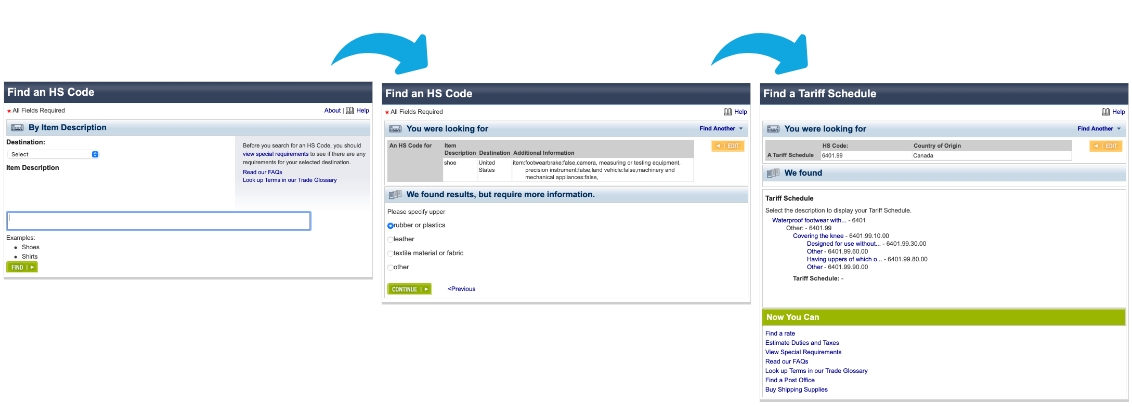
- Get Expert Help: For complex products (or if you ship regulated goods), a customs broker or trade consultant can help confirm your classification and reduce the risk of delays or penalties.
- Stay Updated: HS codes are updated periodically as trade patterns evolve and new product categories emerge. Keeping up with updates helps ensure continued compliance.
How HS Codes Help You Ship Faster and Avoid Delays
HS codes have become integral to optimizing international shipments and fostering global trade growth. Accurately identifying and classifying products empowers businesses to streamline customs clearance, comply with regulations, access trade opportunities, and mitigate risks.
When your paperwork is complete and accurate, customs processing is typically smoother, and you reduce the chances of shipments being held for review due to missing or unclear product details.
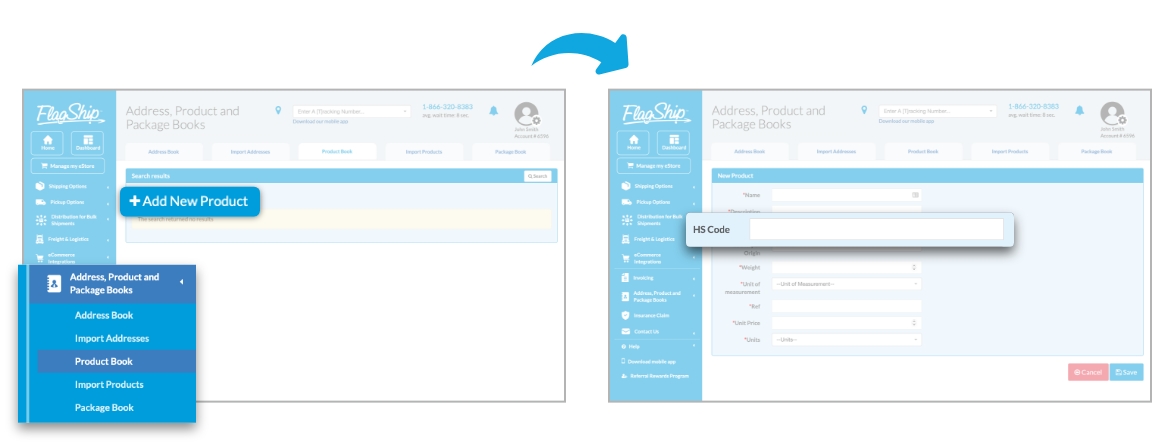
***Note: If you ship the same item(s) regularly, you can save the HS code in the FlagShip online shipping system for future use. In the main menu, go to Address, Product, and Package Book > Product Book and click Add a New Product.
FAQ: HS Codes and International Shipping
Q: What is an HS code?
A: An HS code, or Harmonized System code, is a globally recognized standardized numerical method used by customs authorities to classify trade products.
Q: Why do I need an HS code for my shipments?
A: HS codes help customs accurately identify and classify goods. They help determine duties and taxes, support trade compliance, and reduce the risk of delays due to unclear or incomplete documentation.
Q: How can I find the HS code for my product?
A: You can use the Canada Post HS Code Finder. Enter the destination and product description, then answer the questions to generate the best match.
Q: What if I frequently ship the same item(s)?
A: You can save your HS codes in the FlagShip online shipping system. Go to Address, Product, and Package Book > Product Book and click Add a New Product.
Q: What if I need assistance with my international shipping?
A: Our support team can help. Contact us at 1-866-320-8383 or email support@flagshipcompany.com.
Q: Can the same product have different HS codes in different countries?
A: Yes. The first six digits are globally standardized, but some countries add extra digits to further refine classification, which can vary by destination.
Q: Can I use a general HS code if I’m unsure about the exact classification of my product?
A: It’s best to use the most accurate and specific HS code available. Using a general code can lead to customs delays or penalties. If you’re unsure, consult a trade expert or customs broker.
Q: How often do HS codes get updated or revised?
A: HS codes are updated periodically to reflect changes in global trade and emerging industries. Updates typically occur every five to six years.
Q: Are HS codes the same for both imports and exports?
A: Yes. HS codes classify products regardless of whether they are being imported or exported.
Q: Can I use the same HS code for similar but slightly different products?
A: Not always. If the products differ in material, composition, or use, they may require different HS codes. Always choose the code that best matches the exact product being shipped.
Q: What is the penalty for incorrect HS code classification?
A: Penalties vary by country and can include delays, additional fees, fines, or other compliance actions. Correct classification helps prevent these issues.
Q: Can I change the HS code for my product after it has been shipped?
A: Once customs clearance begins, changes can be difficult and may cause delays. It’s best to confirm the correct HS code before shipping.
Q: Are there any resources to help me understand HS codes better?
A: Yes. Customs authorities publish tariff resources and databases, and tools like the Canada Post HS code finder can help. Customs brokers and logistics providers can also support classification.
Q: Can I self-classify my products, or do I need professional assistance?
A: Many businesses can self-classify using online tools and official references. However, for complex products or regulated items, professional guidance from a customs broker or trade consultant is recommended to reduce risk and ensure compliance.
Ready to simplify your international shipments and tap into the full potential of HS codes? Sign-Up for a FREE FlagShip account. Partner with FlagShip Courier Solutions today. Our expert support team is ready to assist you with shipping inquiries, HS codes, and tailored shipping options. Contact us at support@flagshipcompany.com or call our toll-free number 1-866-320-8383.